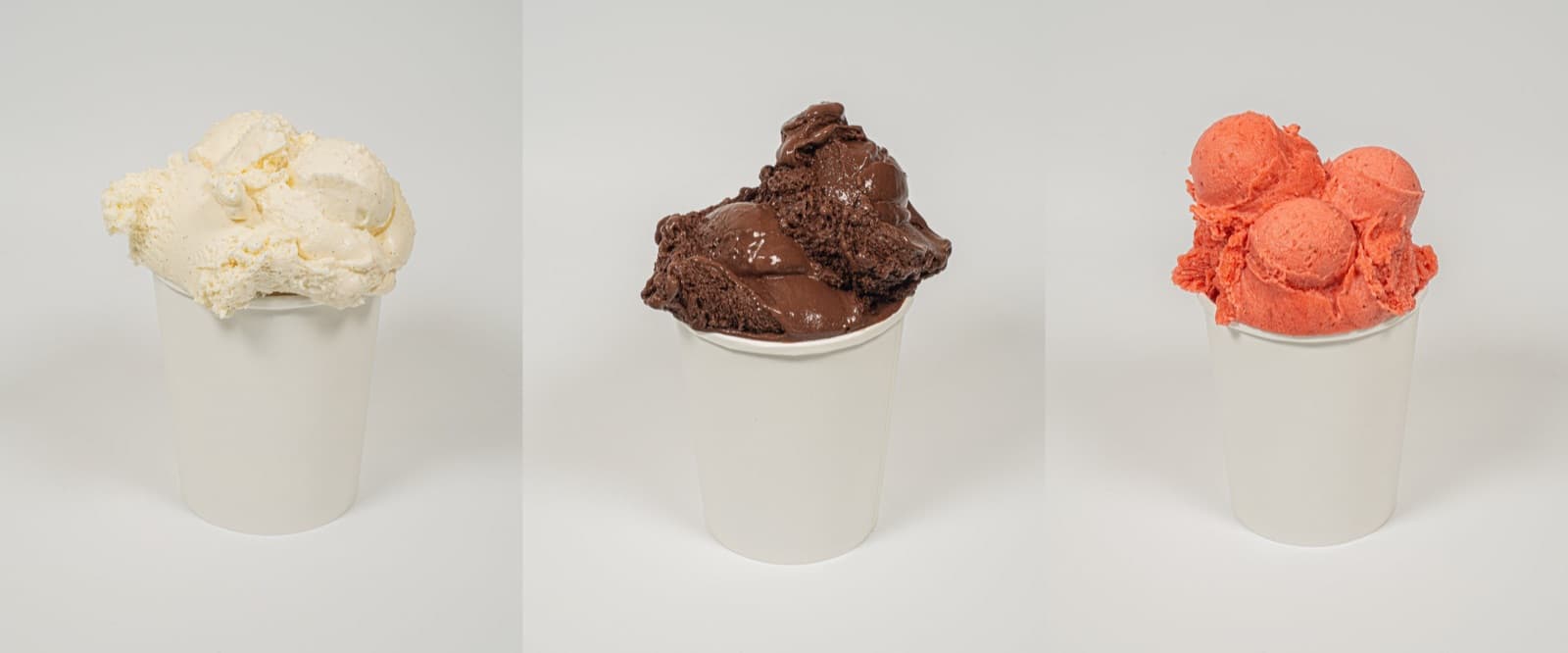
The history of old ice cream flavours is almost as colourful and varied as the flavours in your favourite ice cream parlour. If we go looking for its earliest forms, we end up in ancient China, where people cooled their throats with snow mixtures. And the ancient Romans around Nero already knew how to make sorbets to refresh themselves from the inside. But ice cream as we love and lick it today – that creamy, sweet, cold temptation – has its real roots in 17th-century Europe. The first recipes for dairy ice cream appeared in France and Italy and set off from there on a triumphant march around the world. In short: our love of ice cream has a long, ice-cold past that spans continents and centuries.
You'll find all of our 100+ flavours from A to Z in our list of ice cream flavours.

From hand-churning to endless choice: an ice-cold transformation
"Spoilt for choice" sums it up perfectly when you stand at the counter and your brain goes into pleasure overload at the sight of 20 to 30 irresistible flavours. But let's be honest: this sweet agony is a luxury problem of modern times. Back when ice cream was a hand-churned rarity and ice cream makers brought their creations to life with pure dedication and muscle power, the choice was nowhere near as huge. You might have had the choice between "vanilla", "chocolate" and, if you were lucky, "strawberry".
Ice cream as a luxury: 1.5 litres at most, churned by hand
In an era before freezers were standard, ice cream was a handmade luxury. With the machines of the time, ice cream makers could only make up to 1.5 litres at once. That small amount meant every flavour was a rarity, served straight from the machine into the cone and eaten immediately. Keeping ice cream creations for longer was unthinkable until freezers arrived after the Second World War.
What are the oldest ice cream flavours?
The origins of ice cream go back to ancient civilisations, where the first versions were made from ice or snow with natural flavourings. In ancient China, people are said to have eaten a frozen mixture of milk and rice as a summer treat around 200 AD. The Roman emperor Nero (37–68 AD) is also said to have combined snow with fruit and honey.
In the 17th century, flavoured sorbets and the first ice cream recipes appeared in Europe. Chocolate was one of the very first flavours – with recipes dating back to Naples in 1692. The first documented English ice cream recipe dates from 1718. Vanilla and strawberry soon followed and became fixtures of the ice cream world.
Old ice cream flavours and classics: vanilla, chocolate, strawberry

The classic among classics: chocolate ice cream. Who can resist? The history of this creamy dream goes back to the 19th century. There were recipes for a frozen chocolate brew as early as the 1690s, but that was still miles away from the chocolate heaven we hold in a cone today. The real breakthrough came with the ice cream innovations of the 19th century. Suddenly chocolate wasn't just for high society any more, especially after Coenraad Johannes van Houten invented the cocoa press in 1828 and gave us cocoa powder. This powder revolutionised the ice cream world, because it could be stirred into ice cream recipes easy-peasy. Ever since, chocolate ice cream has been the rock star among flavours – a real golden oldie.
Vanilla – a classic flavour with history
Vanilla ice cream as we know it today has a history going back to the 18th century. The Aztecs already used vanilla to spice chocolate drinks, but using vanilla in ice cream only developed later, after vanilla was introduced to Europe. The first known ice cream recipe, published in a French cookbook in 1691, wasn't vanilla-flavoured, but it laid the groundwork for later developments. Thomas Jefferson is often credited with popularising vanilla ice cream in the United States after visiting France in the 1780s. He brought the recipe back, and from the early 19th century there are records of vanilla ice cream in the USA.

Vanilla flavour thanks to vanilla extract
With the commercial production of vanilla extract in the 19th century, making "vanilla ice cream" became much easier, and it started to become a staple in the western world. The ice cream machine, invented in the mid-19th century, made vanilla and other flavours even more accessible, and it became a popular choice in ice cream parlours and at home. Vanilla, obtained from the pods of the vanilla orchid, was a luxury reserved for the rich for a long time.
The third of the old ice cream flavours: strawberry
The rise of strawberry ice cream is closely tied to the availability and popularity of the strawberry itself, which goes back to the 18th century. Strawberries had long been popular in Europe before they found their way into ice cream. In the 18th century they were grown especially in France and enjoyed a reputation as a delicacy. The first ice creams of that time were simple preparations of snow or ice mixed with fruit and cream. Strawberries were a natural choice for ice cream because they're easy to purée and their aroma unfolds beautifully in the cold mix. Strawberry ice cream, with its fresh and fruity character, completed the trio and, together with vanilla and chocolate, formed the famous Neapolitan ice cream.

A lot has changed in ice cream making since then. Today plant-based binders such as locust bean gum and guar gum are mostly used instead of eggs. They're easier to work with and carry no risk of salmonella. With these new binders, eggs have simply become obsolete in ice cream making. So pregnant women can enjoy a spaghetti ice cream at Katchi in Berlin without worrying. Ice cream without eggs is also much kinder to animals and the environment – thumbs up for locust bean gum.
Fürst Pückler and Neapolitan ice cream conquer the world, from Europe to the USA
Fürst-Pückler-Eis isn't just a frozen dessert – it's a flavour revolution that began in the kitchen of a royal Prussian head chef and crossed the pond. In 1839 Louis Ferdinand Jungius created the first combination of chocolate, vanilla and strawberry and dedicated it to Prince Pückler – an ice cream that tastes like a piece of history. As "Neapolitan ice cream" it sailed from Europe to America, where it was made popular by Neapolitan masters of ice cream. With its three flavours picturesquely echoing the Italian flag, it quickly became a hit in the USA. It's the mix of tradition and a touch of the exotic that made Fürst-Pückler-Eis an unforgettable icon on every ice cream menu.

The golden age of ice cream making
The invention of the modern ice cream machine and freezer technology in the 20th century led to a democratisation of ice cream. Alongside the old flavours vanilla, chocolate and strawberry, this era brought further old classics like hazelnut and pistachio, which we still find and love in the counters today.
From tradition to innovation: the flavour explosion thanks to modern technology
The history of ice cream is a history of constant development and innovation. With advanced refrigeration and powerful ice cream machines in the 19th century, ice cream could be mass-produced. What was once a luxury for the upper classes became a widespread treat. These technical advances, together with the industrial revolution, turned ice cream in all kinds of flavours into an everyday pleasure. The invention of specific kitchen tools, like the cocoa press, was just one example of the innovations that helped diversify flavours. But it was the general availability of new flavourings and ingredients that kicked off the so-called "flavour explosion". By the end of the 19th century, consumers could already choose from a wide range, and with further improvements in refrigeration in the early 20th century, making and eating ice cream became a fixed part of cultural life.

The nostalgic world of industrial ice cream – a trip through the ice cream menus of our childhood
Back before Facebook digitised our childhood memories, it was the colourful ice cream boards from Langnese and Schöller that shaped our sweet dreams. These boards were more than a shop window for the range – they were the catalogue of our childhood wishes. Anyone who grew up in the 80s and 90s will vividly remember the taste of the legendary Brauner Bär, with its cocoa-glazed chocolate flavour melting on your tongue.
The 80s and 90s: "Like Ice in the Sunshine"
The ice lollies from Eskimo on every ice cream board were the highlight of every summer break. Names like Ed von Schleck aren't just names of ice creams – they're synonyms for childhood memories we all share. Ed von Schleck, with its unmistakable vanilla ice cream and irresistible strawberry sauce, is more than just an ice lolly – it's a symbol of a carefree childhood. Every time you pushed it up, Ed von Schleck sparked joy in its fans' hearts again. And who could forget the Calippo? This water ice with its refreshing core, squeezed out of a plastic tube, redefined the category. Calippo came in different flavours, but it was the taste of childhood that kept bringing us back. Calippo, Nogger and the cult Flutschfinger – these names bring back more memories than any Facebook timeline ever could.

Langnese and Schöller create advertising icons
Langnese, the giant among ice cream makers, was a master at linking the taste of ice cream with the best moments of childhood through advertising, set to songs like "Like Ice in the Sunshine". Langnese adverts weren't just sales pitches – they were promises of happiness and freedom, captured in a bite of a Nogger or a Push Up.
Ice cream boards as collector's items for nostalgia fans
One look at social media and we know: today the ice cream boards of the past are sought-after collector's items and the subject of nostalgic videos on Facebook, Instagram and TikTok. Every time a video of an old ice cream board is shared, Langnese fans' hearts beat faster. It's more than a craving for vanilla ice cream – it's the wish to be a child again for a moment. Every mention of names like Capri, Push Up or the classic Nogger brings back a flood of childhood memories.
Water ice is part of the who's who of the ice cream world
From vanilla classics to more unusual creations with strawberry – the variety of the Langnese range had something for every taste. But surprisingly, lots of water ices were especially popular: Raumschiff, Dolomiti, Flutschfinger, Capri, Cola Pop or a Calippo. Ice cream boards were our first steps into a world of choices, and although we have more choice than ever today, the taste of childhood remains unbeatable for nostalgics.
Ice cream as a mirror of society
Advertising turned these ice creams into icons, and clever placement on the ice cream boards made sure brands like Langnese and Schöller are firmly anchored in our childhood memories. Today it's these memories that send us off with our own kids in search of the taste of our childhood. Although the range has changed and some names have fallen by the wayside, the legacy of Eskimo, Calippo and Ed von Schleck lives on in the hearts of everyone who ever stood in front of an ice cream board and picked their favourite.
The renaissance of old flavours:
The three pillars of ice cream tradition – vanilla, chocolate and strawberry – didn't become classics just because of their taste, but also because of their availability and their role in the history of ice cream. In recent years, old flavours have been enjoying a renaissance. While some modern flavours like Sticky Coco and basil lemon are genuinely new, others are a development of old flavours – like cookies 'n' cream, which has vanilla ice cream as its base, or Willy Wonka, a chocolate ice cream with brownies and peanut butter.

Are old flavours still among the most popular?
If you want to know whether the old flavours are still in the top 3 in the ice cream counter, check out our ranking of the most popular flavours.
Spaghetti ice cream
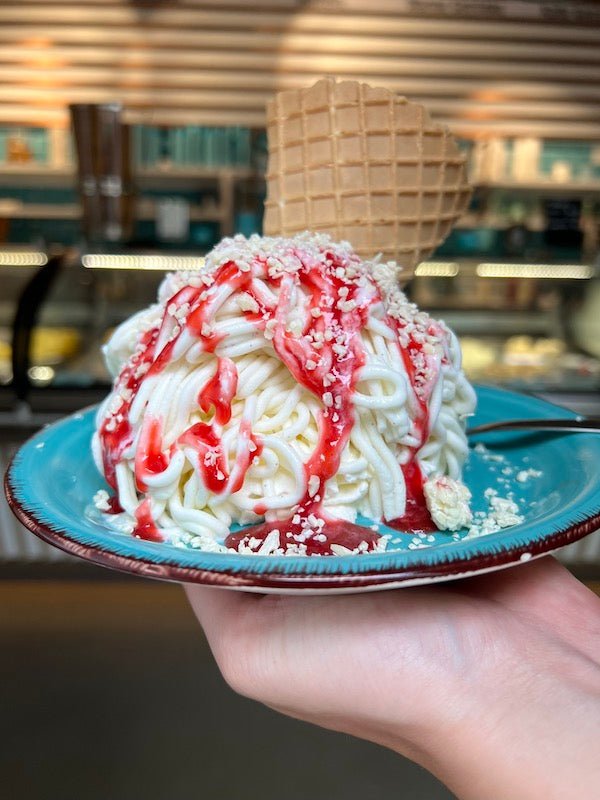
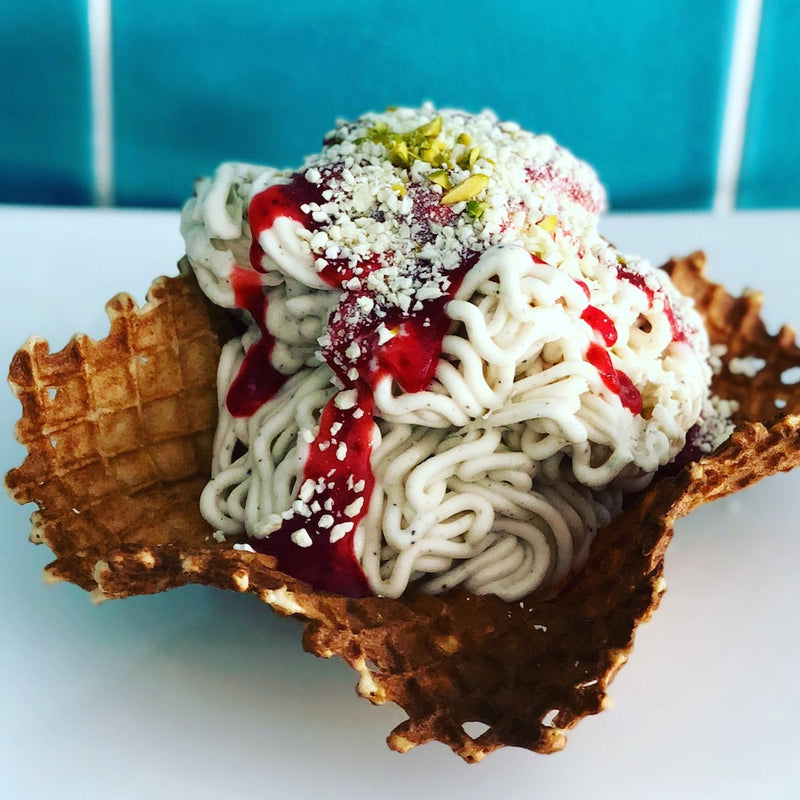
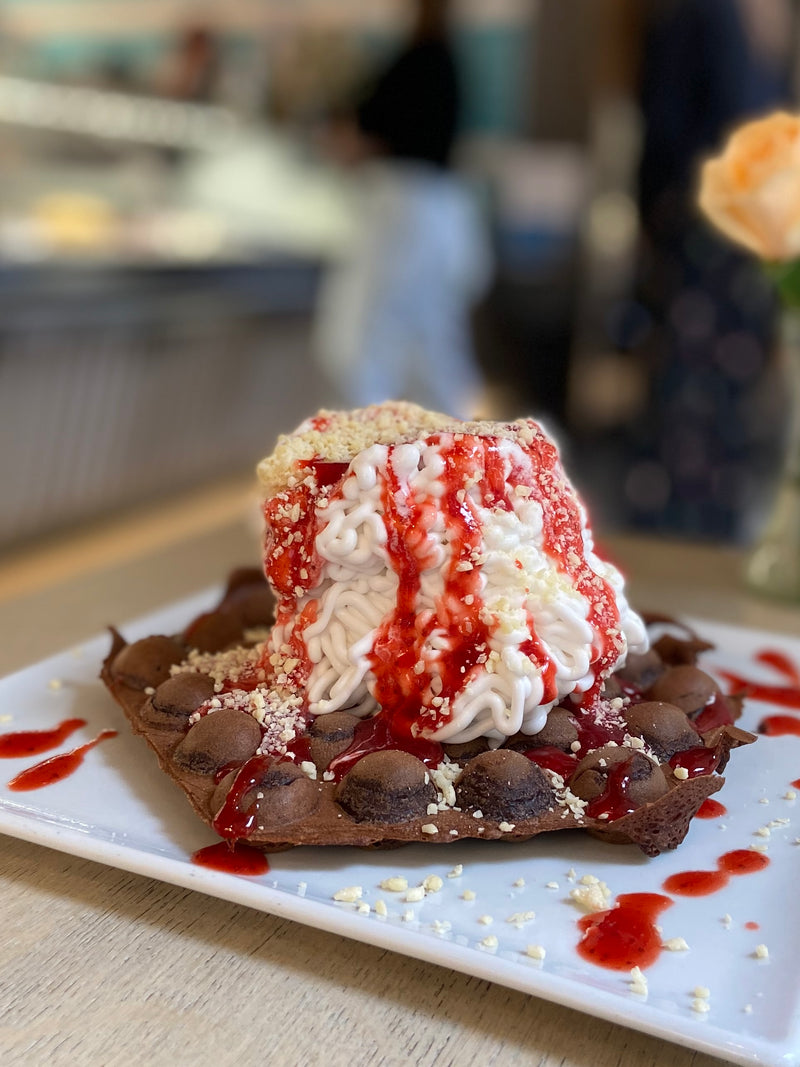
Spaghetti ice cream is Germany's most popular sundae. It was invented in the late 60s by Dario Fontanella in Mannheim and looks like a plate of spaghetti: vanilla ice cream is pressed through a spätzle press and topped with strawberry sauce and white chocolate sprinkles.
What matters for the perfect spaghetti ice cream?
Made with Bourbon vanilla ice cream
Our Bourbon vanilla ice cream is made with organic vanilla pods from Madagascar and is a tribute to tradition and taste.
Under the ice cream there's a generous layer of whipped cream, which we get from a local farm near Berlin.
Homemade strawberry sauce
Topped with our homemade strawberry sauce, which contains 70% real strawberries for an authentic taste and very little sugar, German spaghetti ice cream is a must!
We skip artificial sugar syrups and flavourings, which guarantees a pure, fruity experience. Germany's favourite sundae, invented by Dario Fontanella in Mannheim, is a culinary treat.
Our recipe for the perfect spaghetti ice cream:
- Chill your plate so the ice cream doesn't melt so quickly.
- Start with a base of fresh, fluffy whipped cream.
- Fill the pre-chilled spaghetti press with 2–3 scoops of dense, intensely flavoured Bourbon vanilla ice cream to imitate spaghetti (chill the press for 1–2 hours beforehand).
- Top with around 50 g of fresh strawberry sauce for a fruity note – it imitates the tomato sauce.
- Garnish your spaghetti ice cream with white chocolate sprinkles to imitate parmesan cheese.
- Decorate further with chopped pistachios or a mint leaf for an elegant or fresh touch, if you like.
- Serve with a crunchy wafer for the perfect finish.
The key to a perfect spaghetti ice cream is, of course, using the best vanilla ice cream. To be precise, we use gelato because of its lower fat content. That guarantees a light but full-bodied ice cream experience. But don't worry about the creaminess!
Who invented spaghetti ice cream?
Spaghetti ice cream dates back to 1969, although the exact story of its invention is shared between several ice cream makers. Eliano Rizzardini, who ran an ice cream parlour in Neuss, long claimed to be the inventor. But it's Dario Fontanella from Mannheim who is most often linked to the invention. Inspired by the dessert Montebianco, Fontanella used a spätzle press to push vanilla ice cream into spaghetti-like strands – a technique that only worked once he'd chilled the press in the freezer. Fontanella considered patenting the dish, but the cost put him off.
In the years that followed, spaghetti ice cream won the hearts of ice cream lovers and became a symbol of the heyday of Italian ice cream parlours in West Germany in the 1970s and 1980s.
You can enjoy this sundae in our shops or make it at home with our premium vanilla ice cream.
How much does a spaghetti ice cream cost?
Depending on the ice cream parlour, a spaghetti ice cream usually costs between 8 and 13 euros today. At Katchi you pay 8.90 € for the spaghetti ice cream and 6.90 € for the small version, the Tiny Spaghetti. Hungry for more old ice cream flavours? You'll find the classics in our list of ice cream flavours. Hungry for more old ice cream flavours? You'll find the classics in our list of ice cream flavours.