
Ever caught yourself wondering, while enjoying your favourite ice cream in a crunchy cone, who actually came up with this delicious way to cool down? So, who invented ice cream? So, who invented ice cream? Come along and let's find out – and a few other things, too!
Ice cream is more than just a dessert – it's a cultural phenomenon that crosses generations and borders. From the ancient streets of China, where the first frozen desserts appeared, to the inventive gelaterie of Italy that perfected ice cream as we know it today. Today we're diving into the fascinating history of ice cream. We'll follow the legends, look at the scientific breakthroughs and find out how ice cream conquered the world. Join us on this sweet journey and discover how a simple treat, often served in a crunchy cone, is deeply rooted in human history.
A journey back in time: the history of ice cream
Ever wondered when and where people first used ice on purpose? Surprisingly, the journey starts in ancient Persia, back in the 4th century BC. That's where the first known efforts were made to use ice during the hot summer months. The ancient Persians built large structures, partly underground, known as yakhchāls, which worked like early fridges. These impressive buildings, often cone-shaped and made from a mix of clay, sand, ash and bricks, kept ice from the cold winter months all the way into the heat of summer. The ice wasn't only used to cool down, but also to preserve food.
How ice making developed in different cultures
While the Persians were pioneers in storing ice, other cultures developed their own ways of making it. In ancient China, around the 7th century, special ice-making techniques emerged. The Chinese set out shallow metal containers at night so that the natural cold would freeze the water. The technique spread quickly and became a fixed part of Chinese culture. In Roman times, ice and snow were brought down from the mountain tops and stored in special, well-insulated pits near the palaces and villas of the elite. That ice was used not only to chill drinks, but also to make early forms of sorbet.
Key historical figures in the story of ice cream
A few key figures shaped the history of ice cream decisively. In the 17th century, the Paris-based Italian entrepreneur Procopio Cutò revolutionised the world of ice cream. He improved the ice cream machine and opened the first café in Paris to sell ice cream. His innovations laid the foundations for modern ice cream craft. In America, Thomas Jefferson, the third president of the USA, helped make ice cream popular. He brought vanilla ice cream recipes back from France and served them at home, which helped spread ice cream across the United States. These historical figures and many others played a major part in turning ice cream from an exclusive delicacy into a dessert loved all over the world.
Who invented ice cream? Legends and theories
The history of ice cream isn't just made of hard facts – it's also woven from melting myths and legends. These old stories offer more than an insight into our fascination with ice at different temperatures; they also reflect the trends and cultures of their time.
Myths and stories about how ice cream began

One of the best-known legends comes from ancient Rome and is attributed to Emperor Nero. The story goes that Nero sent messengers into the mountains to collect snow and ice, which was then mixed with fruit and honey to make the first kind of sorbet. Another fascinating story takes us to ancient India, where one author reported that kings enjoyed "ice cakes" during the hot summer months. They were made from snow or ice and fruit juices – an early trend in the art of ice. In Europe, Marco Polo is often linked to the arrival of ice cream. Legend has it that Polo brought a kind of frozen dessert back from China, which later inspired European ice cream. These stories are widespread, but there's little historical evidence for them, and they're often seen as part of culinary folklore.
How believable are these stories?
These legends should be taken with a pinch of salt. They're fascinating and certainly add to the mystique of ice cream's history, but they often lack hard evidence. Historians point out that many of these stories were exaggerated or romanticised over time. The link between Marco Polo and the arrival of ice cream in Europe, for example, is a popular but historically unproven tale. The truth is that ice cream most likely developed gradually over many centuries and cultures rather than being invented suddenly by one historical figure. Still, these legends give us valuable insight into how different cultures saw ice and how it found its place in their culinary traditions.
A development begins
The role of science in better ice cream making
Scientific research into the properties of water and cold played a crucial role in the development of modern ice cream making. In the 18th and 19th centuries, scientists began to understand the principles of thermodynamics, which led to a more efficient and systematic way of making the treat. This knowledge made it possible to produce ice in larger quantities and consistent quality – which was revolutionary, especially for storing and transporting everyday food.
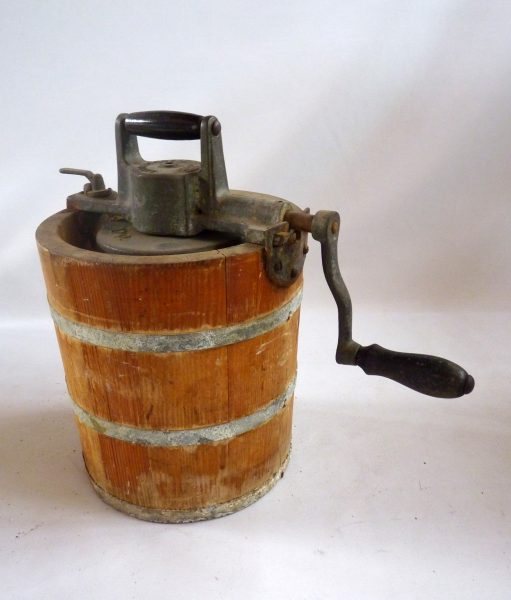
The arrival of the fridge and its impact on ice cream production
A turning point in the history of ice cream was the invention and spread of the fridge in the 20th century. This technology changed not only the food industry, but also how people enjoyed ice cream every day. With the fridge, making ice cream became accessible and practical at home. That led to a huge rise in the popularity of ice cream and other frozen desserts. Before, ice had to be gathered laboriously from natural sources and stored in ice houses. With the mechanical fridge, ice could be produced right on the spot, without relying on natural sources of cold. That paved the way for the modern ice cream industry, which now offers countless varieties and flavours. Technology also brought a whole range of ice cream machines and freezing systems that make ice cream in different forms and textures. From the simple ice cube maker to complex ice cream machines – technology has turned ice cream making into an art form.
Modern ice cream making: a cool wonder
Making ice cream today isn't just a craft – it's almost an art form. There are two big schools: the industrial grandmasters and the artisan creatives. And believe us, there are more differences between them than between vanilla and chocolate!
How is ice cream made today?
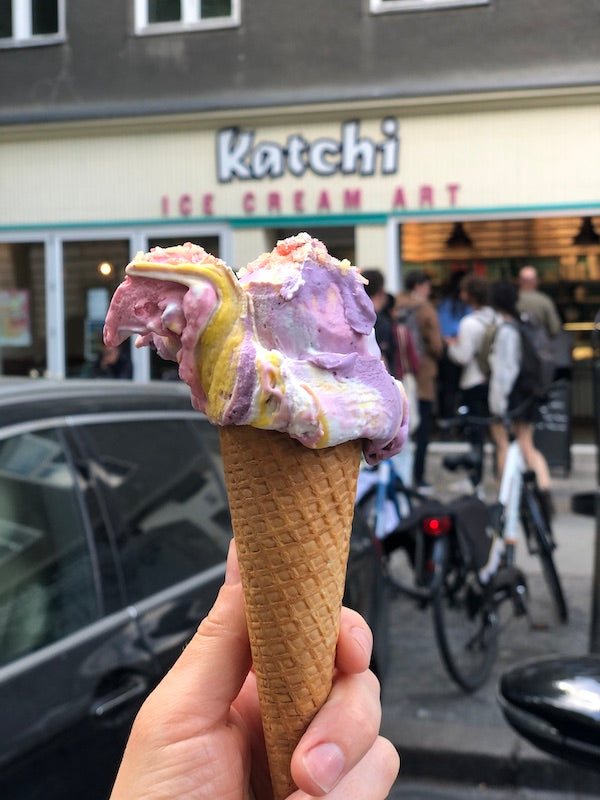
Industrial ice cream making looks like a sci-fi movie parody: giant machines, flashing lights and enough pipes and valves to make a spaceship jealous. Here the ingredients aren't simply mixed – a scientific formula is followed. Pasteurisation, homogenisation and rapid freezing make the ice cream so smooth you'd think it came from another planet. On the other side there's artisan ice cream making, which looks more like a scene from a cosy, nostalgic film. Smaller businesses, often family-run, where every spoonful is made with love and its own character. Instead of huge machines there's often just one ice cream machine and a passionate ice cream maker experimenting with natural ingredients and creative recipes. Just like here at Katchi, every ice cream is one of a kind – as individual as the people who make it.
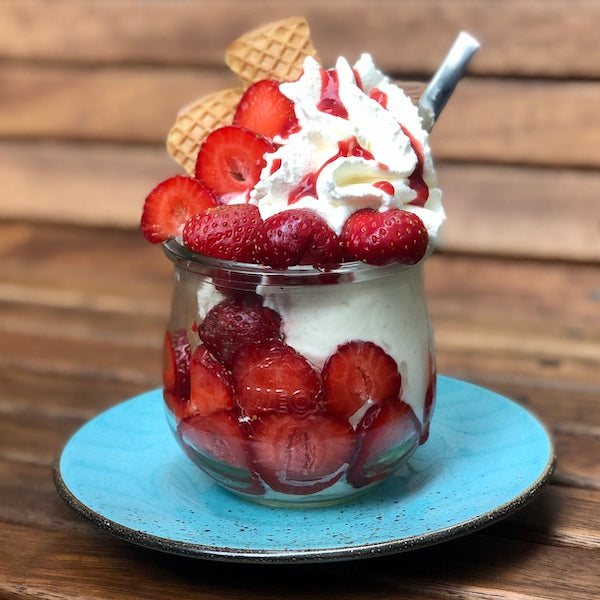
Often, though, ice cream isn't just served on its own but dressed up creatively in a sundae. From spaghetti ice cream to fruit sundaes – read all about the most popular sundaes HERE
Industrial vs. artisan ice cream
Industrial ice cream is like the big blockbuster – available everywhere, reliable in taste, and you always know what you're getting. It uses stabilisers and emulsifiers to make sure every ice cream looks and tastes the same, whether you buy it in Berlin or Budapest. Artisan ice cream makers are more like indie films: smaller, more personal and sometimes a little quirky. They often skip artificial additives and focus on freshness and quality instead. That's where you find unusual flavours you'll never see on a supermarket shelf – Sticky Coco, anyone?
If you're wondering what the craziest flavours out there are – we've got you. Click HERE to find out more about the most unusual combinations.
In modern ice cream making these two worlds sometimes blend, and the result can be as surprising as an unexpected plot twist in your favourite series. Industrial or artisan – one thing stays the same: ice cream is and always will be cool!
Ice cream culture today: an ice-cold trip around the world
Ice cream isn't just a sweet temptation – it's a global ambassador of pleasure! You'll find ice cream in almost every corner of the world, but everywhere with its own twist. Come along on a little frosty world tour and discover how ice cream has won hearts (and taste buds) in different cultures.
Ice cream in different cultures and countries
In Italy, often seen as the cradle of modern ice cream, you'll find gelato in a variety that will make your head (and spoon) spin. Gelato is creamier and denser than classic American ice cream and is often made with fresh, local ingredients – from classic stracciatella to unusual creations like basil and lemon.
Hop over to Japan and you'll meet the mochi ice cream trend – a brilliant combination of traditional mochi (sticky rice cake) and ice cream. The sweet, chewy outer layer wraps around a cool, creamy filling and creates an experience as unforgettable as a sunset over Mount Fuji.
In the USA, the land of unlimited possibilities, ice cream is a symbol of comfort and nostalgia. From giant sundaes in diners to experimental flavours in hip parlours – America loves its ice cream in every shape and size. Favourites include Rocky Road and Peanut Butter Cup.
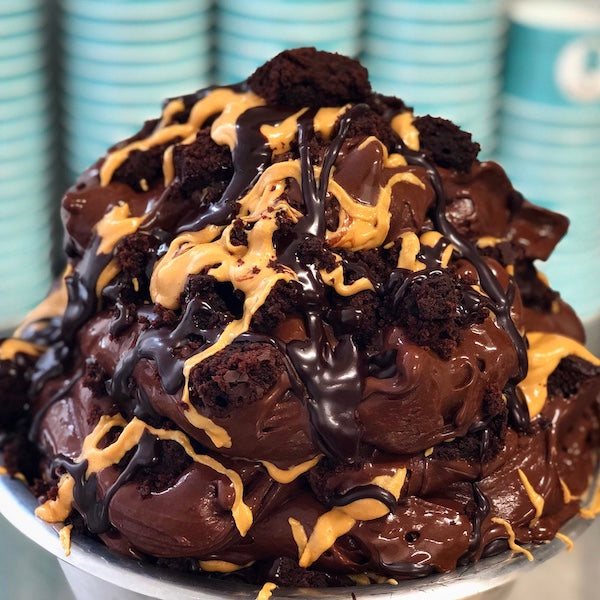
But don't worry, you'll find plenty in Germany too, at ice cream parlours like Katchi, where you can taste your way from the Willy Wonka Chocolate Bomb to Banana Curry.
Popular ice cream styles around the world
In Turkey you'll come across dondurma, the famous Turkish ice cream. It's known for its stretchy texture and is often sold with a show in which the vendor twirls the ice cream around on long sticks before handing it over. In Mexico there are paletas – basically a fiesta on a stick. These frozen fruit lollies come in countless flavours, from sweet to spicy and from fruity to creamy. Some are even seasoned with chilli – not for the faint-hearted! And don't forget the countless regional varieties. In India, for example, there's kulfi, a traditional ice cream flavoured with spices like cardamom and saffron. In Scandinavia you'll find liquorice ice cream, a nod to the Nordic love of all things liquorice.

Want to know what different ice creams cost around the world – or at least in different European cities? Find out HERE.
Conclusion: the ice cream that enchants the world
So who invented ice cream? Not one single person. So who invented ice cream? Not one single person. From the ancient ice stores of Persia to today's hip ice cream parlours, our journey has shown that ice cream is much more than a way to cool down. It's a historical wonder, a scientific work of art and a cultural treasure. We've traced how ice cream evolved over the centuries, looked at the different ways it's made and dived into the fascinating world of ice cream styles around the globe. Ice cream combines tradition with innovation and brings people together around the world in the sweetest way. So simple and yet so varied – ice cream really is a treat that has conquered the world.